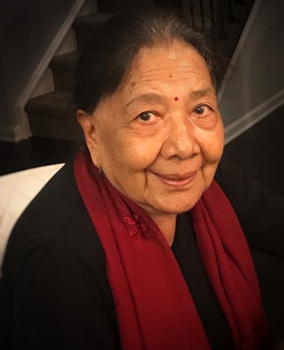
Shanti Mishra
Nancy Hatch first met Shanti Shrestha in June 1968 when she and Doug left their Peace Corps post in far western Nepal (Silghari, Doti) to spend their last three months of Peace Corps service in Kathmandu where Doug had been asked to help write a math curriculum. Nancy was given the opportunity to work with Shanti Shrestha at the new Tribhuvan University Library. Shanti was the only trained librarian in the country – she earned her library degree at George Peabody College in Nashville, TN. According to Narayan Mishra (Shanti’s future husband), Nancy was given her first tour of the library by Narayan, an assistant librarian (Nancy unfortunately doesn’t remember this!). Narayan began working at the library in 1965, and he told Nancy that he and Shanti were quite attracted to each other right from the start, but because of cultural and societal issues, they kept their relationship a secret. Nancy and Shanti quickly became quite good friends, but Nancy never guessed that Shanti and Narayan would eventually marry.
Shanti’s mother died very suddenly in the fall of 1968 and Nancy spent many hours with her, sharing her grief. At that time Narayan was in New Delhi working on his library degree. Shanti was the eldest of three children, and as the oldest, now felt the responsibility to help her father find mates for her brother and sister. Arranged marriages were the norm in Nepal at that time. Shanti was successful in this effort and the weddings were planned for shortly after the first anniversary of her mother’s death. Only after this did Shanti and Narayan feel that they could tell their families that they wanted to get married. The marriage of Shanti and Narayan caused quite a bit of talk in Kathmandu at the time for several reasons. First, this was a “love marriage” which was quite unusual, particularly between a boss and an employee; second Narayan came from a very conservative Brahmin family and Shanti was from a Newar Shrestha family and intercaste marriages were not easily accepted in those days. Shanti and Narayan’s marriage on May 8, 1970 took place at the Saraswati Temple at Swauambhu and Doug and I had the great pleasure and honor of being there and taking their wedding pictures. Our friendship with both Shanti and Narayan developed over the years and we became very close friends. Doug and Nancy named their first daughter, born in Nepal, Shanti. Later Doug and Nancy hosted Narayan and Shanti's daughter, Pragya, in Cortland, NY for the remainder of her high school education, college degree and M. D. degree.
Dear Dougji and Nancy,
With immense joy, pride and happiness, I have wonderful news to share with you today. I knew you would be even happier than I am to hear it, so I tried to call you. Unfortunately, our telephone connection was interrupted, and I was unable to tell you about it.
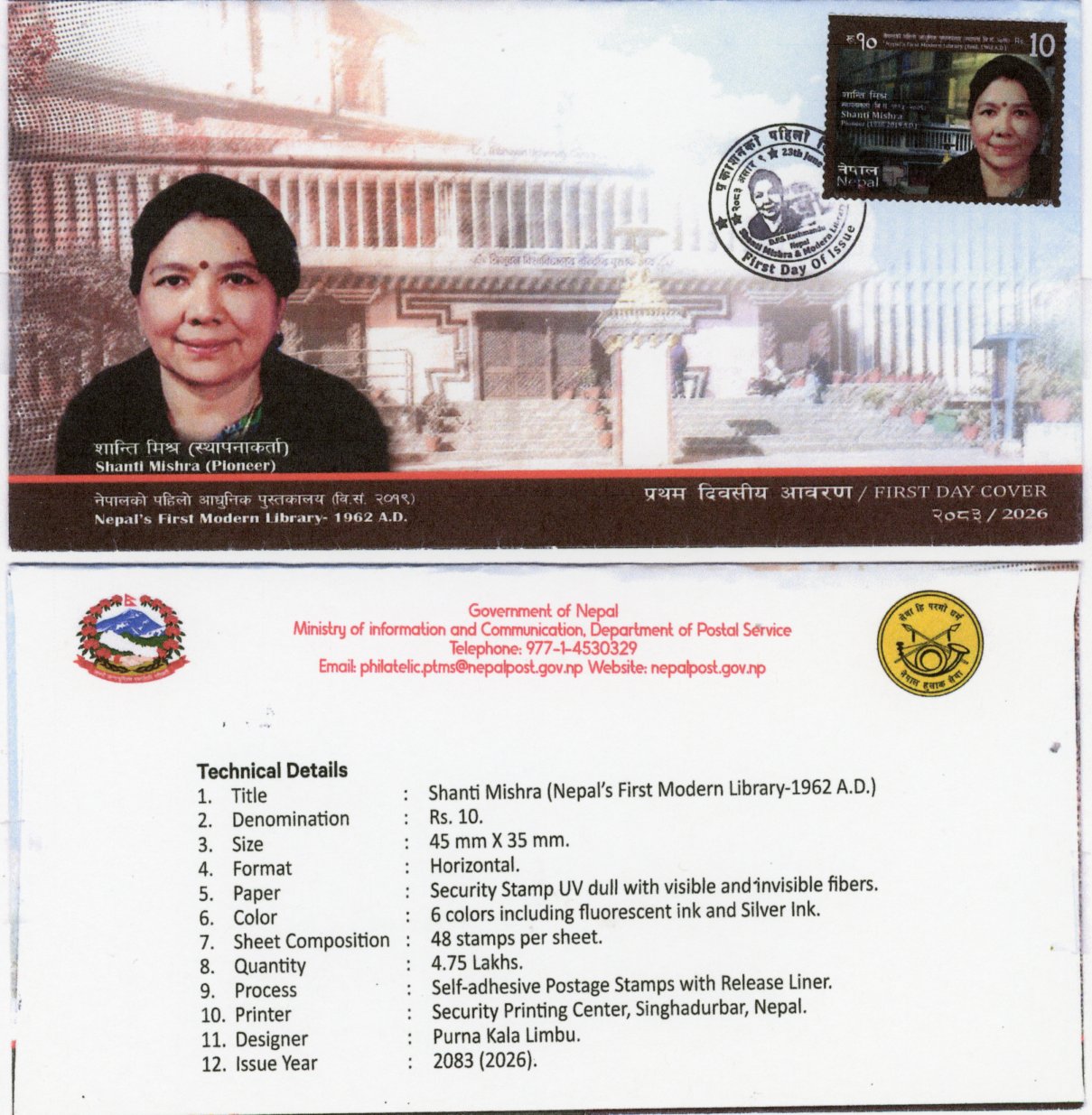
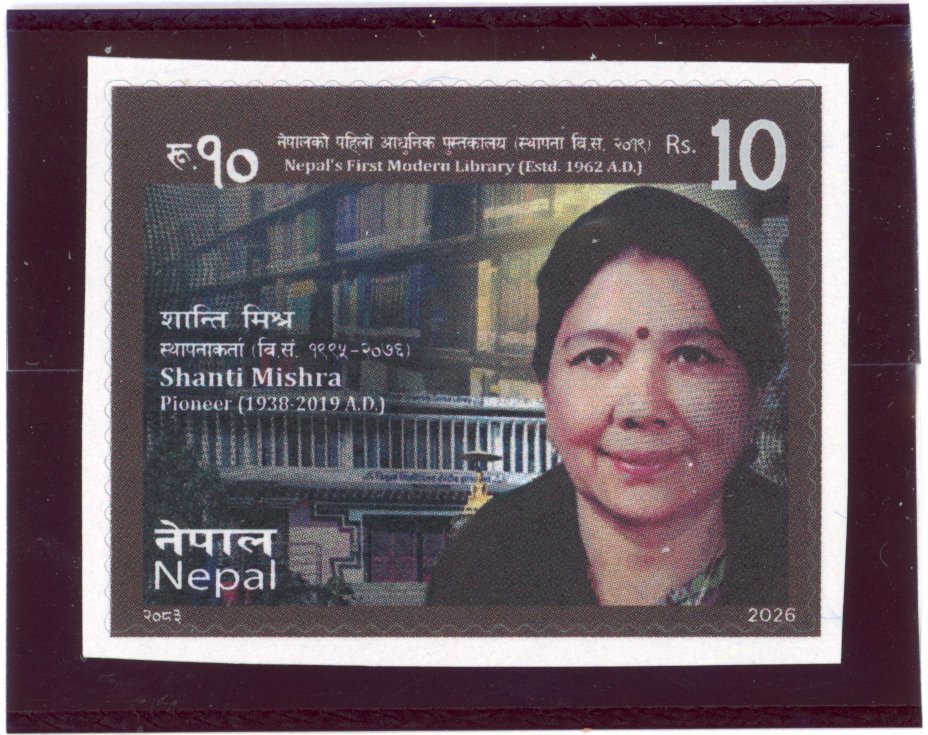
Today, June 23, 2026, the Government of Nepal issued a Commemorative Postage Stamp in honor of our Shanti — my Shanti, your Shanti — in recognition of her extraordinary and pioneering contributions to the development of modern library services in Nepal, including her role in developing the Tribhuvan University Central Library into Nepal’s first modern library. [Note: Nancy worked with Shanti as a Peace Corps volunteer on this project.]
This honor is not only a recognition of her personal achievements but also a tribute to the values she cherished throughout her life.
I felt deeply honored and profoundly happy to witness this national recognition at a grand ceremony held today at the Ministry of Communications. During the ceremony I expressed my heartfelt gratitude to the Government of Nepal and to all those whose support and efforts made this recognition possible.
I remembered both of you during the ceremony, especially Dougji, as a devoted lover and collector of postage stamps. I wish you had been there to share this special moment..... Narayan
From Wikipedia.
Shanti Mishra (née Shrestha; 22 June 1938 – 15 May 2019) was a Nepali lecturer, librarian, writer and translator.[1][2] She was the first Nepali female full-time lecturer and first Nepali female librarian. She was the first female librarian of Tribhuvan University Central Library. She also served as the founding director of PEN chapter of Nepal.[3]
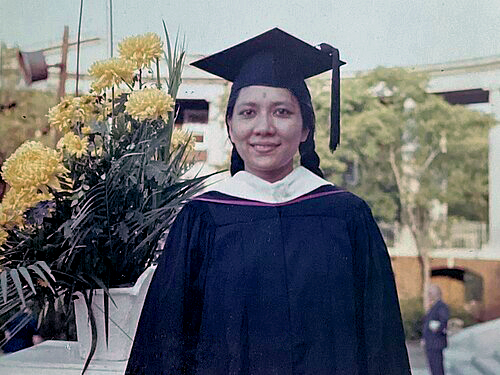
Mishra at her Master of Library Science Graduation ceremony in the USA in 1963.
Mishra was born on 22 June 1938 (7 Ashadh 1995 BS) in Jhochhen, Kathmandu, as the eldest daughter to father Janaki Lal Shrestha and mother Krishna Devi Shrestha. She had one younger brother and a younger sister.
She received her IA and BA degree from Scottish Church College, Calcutta and an MA degree in history from Calcutta University. In 1959, when the Tribhuvan University Central Library was established, she received an opportunity to study library science in USA. She received an MA degree in library science from George Peabody Library School, Vanderbilt University.[4]
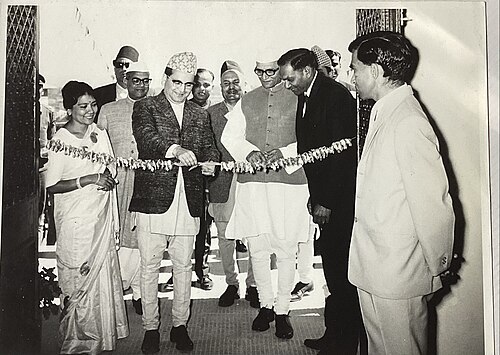
Mishra at the inauguration of the TU Central Library Building at Kirtipur in the presence of the then Prime Minister Surya Bahadur Thapa and the Deputy Prime Minister of India Morarji Desai
She returned to Nepal in 1962. She was appointed as the Chief Librarian of TU Central Library on 1 May 1963 (18 Baisakh 2020 BS). The library was initially at Tripureshwor and shifted to Kirtipur in 1967. During a visit by British educationalists in her tenure in 1969, the library was announced as "almost unique in Southeast Asia". The visit was covered by the BBC and the library became a token of pride in the country.[5] She worked in Tribhuvan University for three decades.[citation needed]
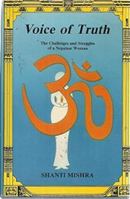
She, with her husband wrote a book on library science titled Pustakalaya Bigyan ko Ruprekha. The book was published in 2038 BS (1981–1982). She then wrote a memoir Voice of Truth: The Challenges and Struggles of a Nepalese Woman, depicting the hardships of a woman in South-Asia. The book was published in 1994. She also wrote Tri. Vi. Kendriya Pustakalaya ko Gaurabshali Kahani ra Hamro Sewa, a book on the history of TU Central library, co-written with her husband. She retired in 2049 BS (1992–1993).[4]
She also served as the Member-Secretary of the International Women's Year Committee of Nepal in 1975. She was one of the signing members for the establishment of the PEN chapter in Nepal alongside prominent writers such as Greta Rana, Toya Gurung, Ashesh Malla, Bhuwan Dhungana, Dhruba Chandra Gautam, etc. She served as the founding director of the PEN International Nepal.[6]
She also served as Chairman of Martin Chautari, Advisor to the Sancharika Samuha(Women Media Group), UNESCO Consultant for the construction of a modern library in Bhutan in 1985 and the Vice-Chairman of the Rudra Raj Pandey Sahitya Sewa Samiti. Mishra was also an honorary member of the United Nations Women's Organization and the Active Women of Nepal.[4]
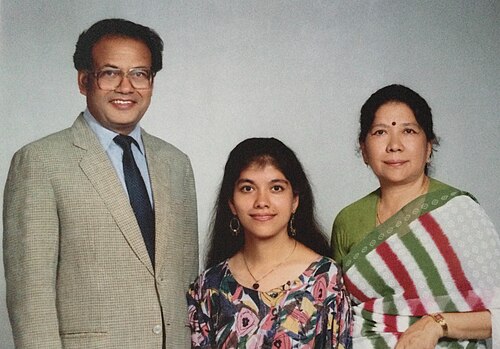
Shanti Mishra with her husband Narayan Prasad Mishra (left) and daughter Pragya Mishra (centre)
She married Narayan Mishra, a co-worker on 8 May 1970 (25 Baisakh 2027 BS). They had a daughter, born in 1971.[citation needed]
She moved to the US for her health treatment in June 2018 with her husband. She was suffering from gall bladder cancer.[7] She died on 15 May 2019 (1 Jestha 2076 BS) in Indianapolis, Indiana.[4] She is survived by her husband and her daughter.[8]
She received the International Library Movement Award from India for her extraordinary contribution to the library sector. In 2010, a fund of NPR 433,000 was established to award Narayan-Shanti Mishra Gold Medal and Shanti-Narayan Mishra Gold Medal to the first place student at the postgraduate level in journalism and library science respectively in Tribhuvan University.[4]
In 2021, her husband donated their book collection worth 3 million NPR to TU Central library.[9] The donated 1670 books were displayed in the Library in the name of the Shanti Narayan Collection.[10]
Shanti Mishra Recognition 2026 |
|
|---|---|
|
Tribhuvan University Central Library (TUCL) was established in 2016 B.S. (1959 A.D.) considered as the biggest and first modern library jn Nepal. At the time of its establishment, TUCL had a meager collection of only few hundred books. Ever since then, the collection kept on growing and, by now, after 67 years of its establishment, the collection exceeds more than 410,000 volumes of documents consisting of books, bound periodicals, thesis, audio books and other documents. It's located at the university's central campus premises in Kirtipur, Kathmandu.
Late Shanti Mishra was born on June 22,1938 in Kathmandu to Janaki Lal Shrestha and Krishna Devi Shrestha. She received her Master degree in history from Calcutta University. In 1959, when the Tribhuvan University Central Library was established, she received an opportunity to receive Master's Degree in library science from George Peabody Library School, Nashville Tennessee, USA.
Mishra was a Nepali lecturer, librarian, writer and translator. She was the first Nepali female chief full-time lecturer and first Nepali female librarian. She was appointed as the first Chief Librarian of Tribhuvan University Central Library on i May 1963 and became the pioneer of the library profession in Nepal.
That was the time there was no modern library existed in Nepal. The Nepali society was not acquainted with modern library and its valuable role in supporting educational institution's study, teaching and research. At such a time, she created a modern model of library different from sorting books and magazines to the center of imparting and disseminating knowledge and information. She propagated the importance of modern libraries throughout the country. She summited a plan for modern library development in the country as a convenor of the National Education Advisory Council, Library Committee of the government in 1967. During her tenure, in 1969, the library was hailed by BBC news as "One of the unique libraries in South-East Asia". After that, many international distinguished officials visited the library.
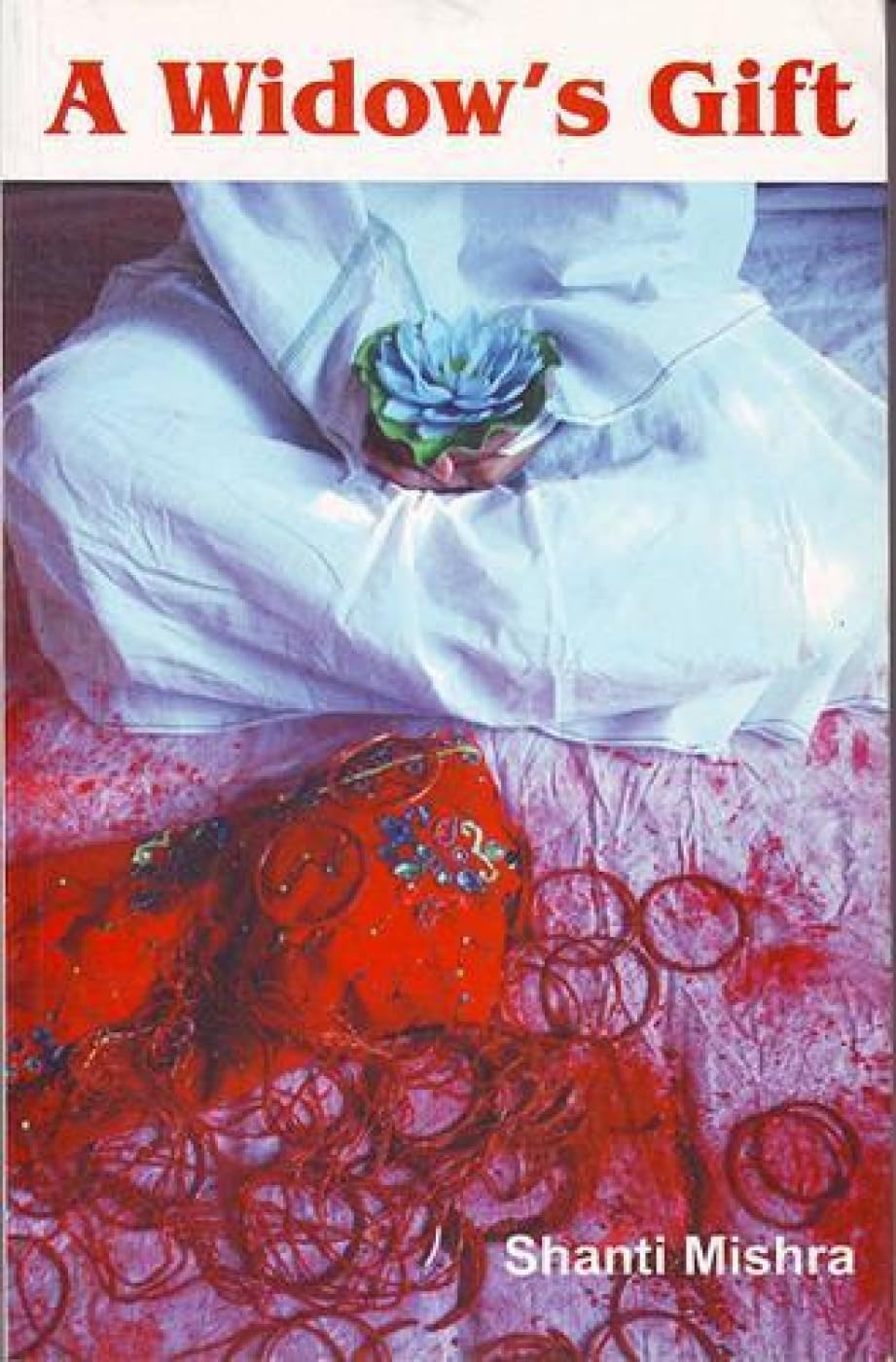
Mishra wrote the books on library science titled Pustakalaya Bigyanko Ruprekhaand Tri. Vi. Kendriya Pustakalaya ko Gaurabshali Kahanira Hamro Sewa (a book on the history of TU Central library) as co-author with her husband. She wrote the three books about women 1. Voice of Truth: The Challenges and Struggles of a Nepalese Woman (depicting the hardships of a woman in South-Asia)
Books by Shanti Mishra. | ||
|
|
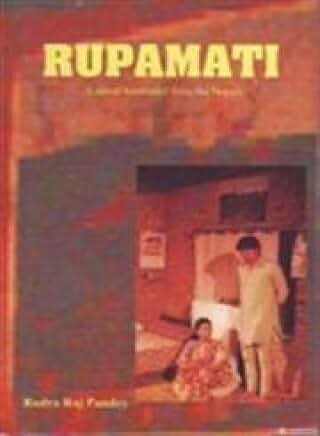
|
Multi-talented Shanti Mishra had made significant contributions not only in the library sector but also in education, women's development, literature, journalism, social welfare etc. She also served as the Member-Secretary of the International Women's Year Committee of Nepal in 1975. She was one of the signing members for the establishment of the PEN chapter in Nepal. She also served as Chairman of Martin Chautari, Advisor to the Sancharika Samuha (Women Media Group).
The Central Library, which has been oriented towards modern technology over time to minimize the problems that arose in the management of knowledge materials and speedy service delivery. It has been making a significant contribution to keeping the country's art, literature and history alive for future generations by providing a repository of knowledge and information for study and research, the mental and intellectual development of students and researchers, and free or paid books for out-of-reach readers. Therefore, the Department of Postal Service has issued the postage stamps of this library and its pioneer late Shanti Mishra of denomination Ten Rupee.
(From The Rising Nepal).
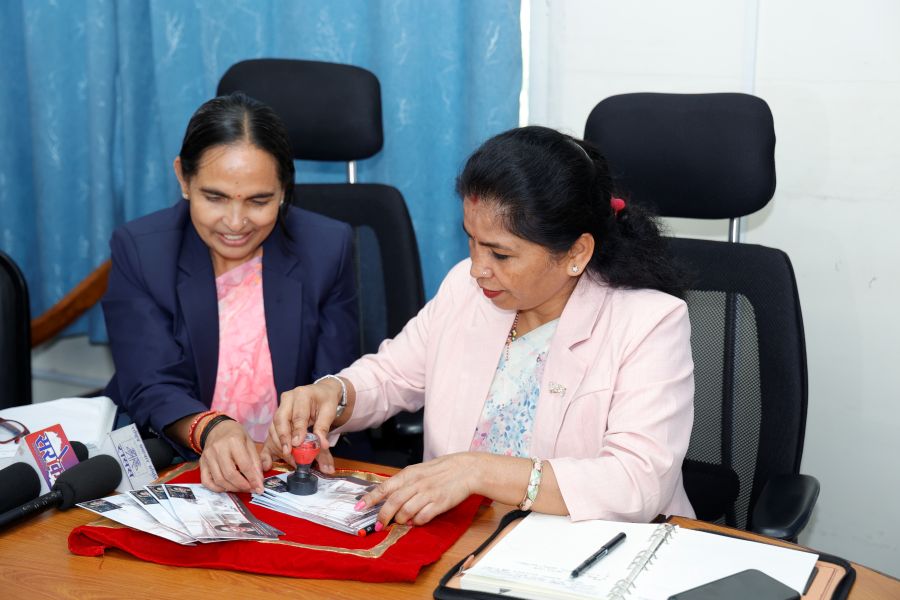
Kathmandu, June 23: The Department of Postal Services has issued a postage stamp in honour of Shanti Mishra, the founder of first modern library.
Secretary at the Ministry of Information and Communications, Laxmi Kumari Basnet, affixed the first cancellation mark on the stamp amidst a programme here today. Mishra is recognised for significantly contributing to the establishment of the country's first modern library in 2019 BS.
On the occasion, Secretary Basnet applauded the hard work and dedication of Mishra in transforming the Tribhuvan University (TU) Central Library established in 2016 BS in an advanced facility. She also acknowledged the Department's decision to issue the stamp in honour of the woman's contribution.
Mishra's spouse, Narayan Mishra, spoke about the late Mishra's dedication to the development of libraries. "She chose the library over teaching career to focus on the development and further institutionalization of libraries.
TU Central Library Chair Sagar Raj Subedi said the facility is founded on the significant contributions of Mishra. The library is now home to over 4,000 collections and has already been transformed into an e-facility.
Department's Director General Manamaya Bhattarai Pangeni said a stamp is not just a piece of paper but a means for recognizing historic accomplishments and people. "Through this stamp, the Department has acknowledged the contribution of Shanti Mishra and paid homage to the modern library movement." (RSS)